Transcription and Translation Diagram Generator DNA to Protein
Make a transcription and translation diagram online. Type a DNA sequence and get the mRNA, codons, and the amino acids it codes for — drawn as a clean, labeled central-dogma diagram. Download free SVG/PNG, or use AI for stylized DNA-to-protein illustrations.
Transcription & Translation Diagram Examples
Central-dogma illustrations plus sequence-accurate diagrams built from a DNA sequence by the exact engine
Central Dogma Overview
The central dogma at a glance — DNA is transcribed into mRNA, then translated into protein at the ribosome.
Transcription
Transcription: RNA polymerase reads the template strand of DNA and builds a complementary mRNA strand.
Translation at the Ribosome
Translation: the ribosome reads mRNA codons while tRNAs deliver matching amino acids to extend the protein.
Transcription vs Translation
Compare the two stages — transcription happens in the nucleus, translation at ribosomes in the cytoplasm.
Sequence Diagram (Exact)
Built by the exact engine from your DNA sequence — coding & template strands, mRNA codons, and the amino acids they code for.
Transcribing the Template Strand
Start from the template strand — the engine derives the coding strand, mRNA, and the translated peptide for you.
What is a transcription and translation diagram?
A transcription and translation diagram shows the central dogma of molecular biology: how the information in a gene flows from DNA to RNA to protein. Transcription is the first step, where a DNA sequence is copied into a messenger RNA (mRNA) strand. Translation is the second step, where the ribosome reads the mRNA in three-letter codons and joins amino acids in that order to build a protein. This generator does both — type a DNA sequence and it draws the coding and template strands, the transcribed mRNA broken into codons, and the amino acids each codon codes for.
Transcription: DNA to mRNA
During transcription, RNA polymerase reads the template strand of DNA and assembles a complementary mRNA strand. The mRNA reads the same as the coding (sense) strand of DNA, except that uracil (U) replaces thymine (T). This tool labels both the coding strand (5′→3′) and the template strand (3′→5′) so it is always clear which strand is which — the single thing students most often mix up. You can type either strand and switch the input with one click.
Translation: mRNA codons to amino acids
- The ribosome reads the mRNA in codons — groups of three bases.
- Translation begins at the start codon AUG (which codes for methionine) and continues codon by codon.
- Each codon is matched by a tRNA carrying a specific amino acid, and the amino acids are joined into a polypeptide.
- Translation ends at a stop codon (UAA, UAG, or UGA), which codes for no amino acid and releases the finished protein.
The genetic code and the reading frame
The genetic code is the set of rules that maps each of the 64 mRNA codons to an amino acid or a stop signal. It is read in a fixed reading frame set by the first AUG: the bases are grouped into non-overlapping triplets from that point on. This generator uses the standard genetic code, finds the first AUG to set the reading frame, translates until the first stop codon, and shows the resulting peptide in three-letter form (for example Met-Ala-Ser) — so the codons and amino acids are always correct, which is exactly what AI image tools get wrong.
How to use the transcription and translation diagram generator
- Type or paste a DNA sequence, or pick one of the examples.
- Choose whether your sequence is the coding strand (5′→3′) or the template strand (3′→5′).
- Read off the mRNA, the codons (with the start codon and stop codon highlighted), and the amino acids in the protein.
- Add a title and download a crisp SVG or high-resolution PNG. The diagram is built in your browser and uses no image credits.
When to use the AI illustration mode
The Sequence diagram mode is the accurate one: it transcribes and translates your exact sequence with the correct codons, amino acids, and strand directions. Switch to AI illustration when you want a stylized central-dogma poster, a hand-drawn ribosome and tRNA, or a richly annotated overview of protein synthesis for a slide or worksheet. Use the precise mode for correctness and AI for illustration.
Questions Fréquentes
Related Biology Tools
 Biology
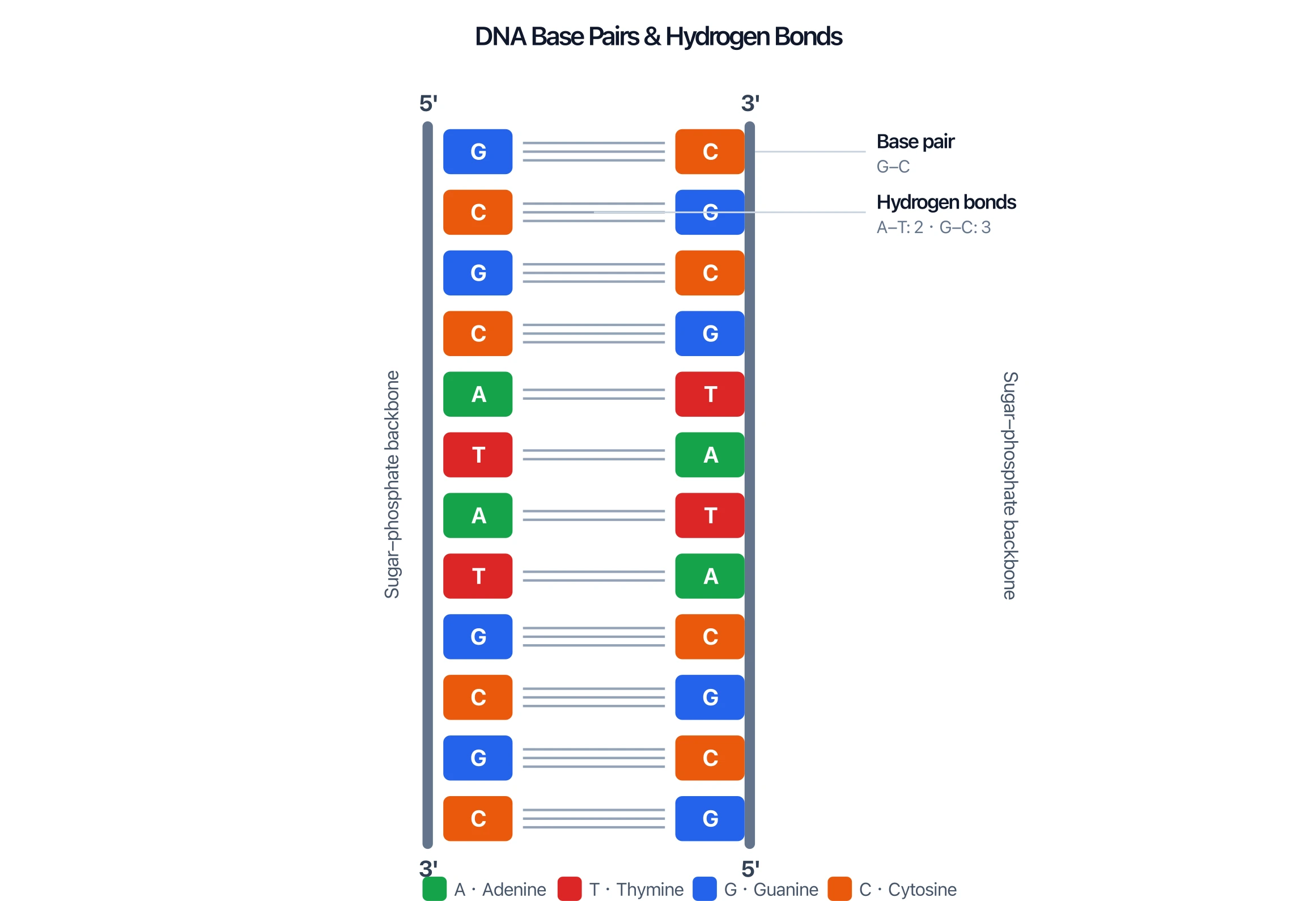
DNA Structure Diagram Generator
Draw labeled DNA double-helix and base-pair diagrams for biology class.
 Biology
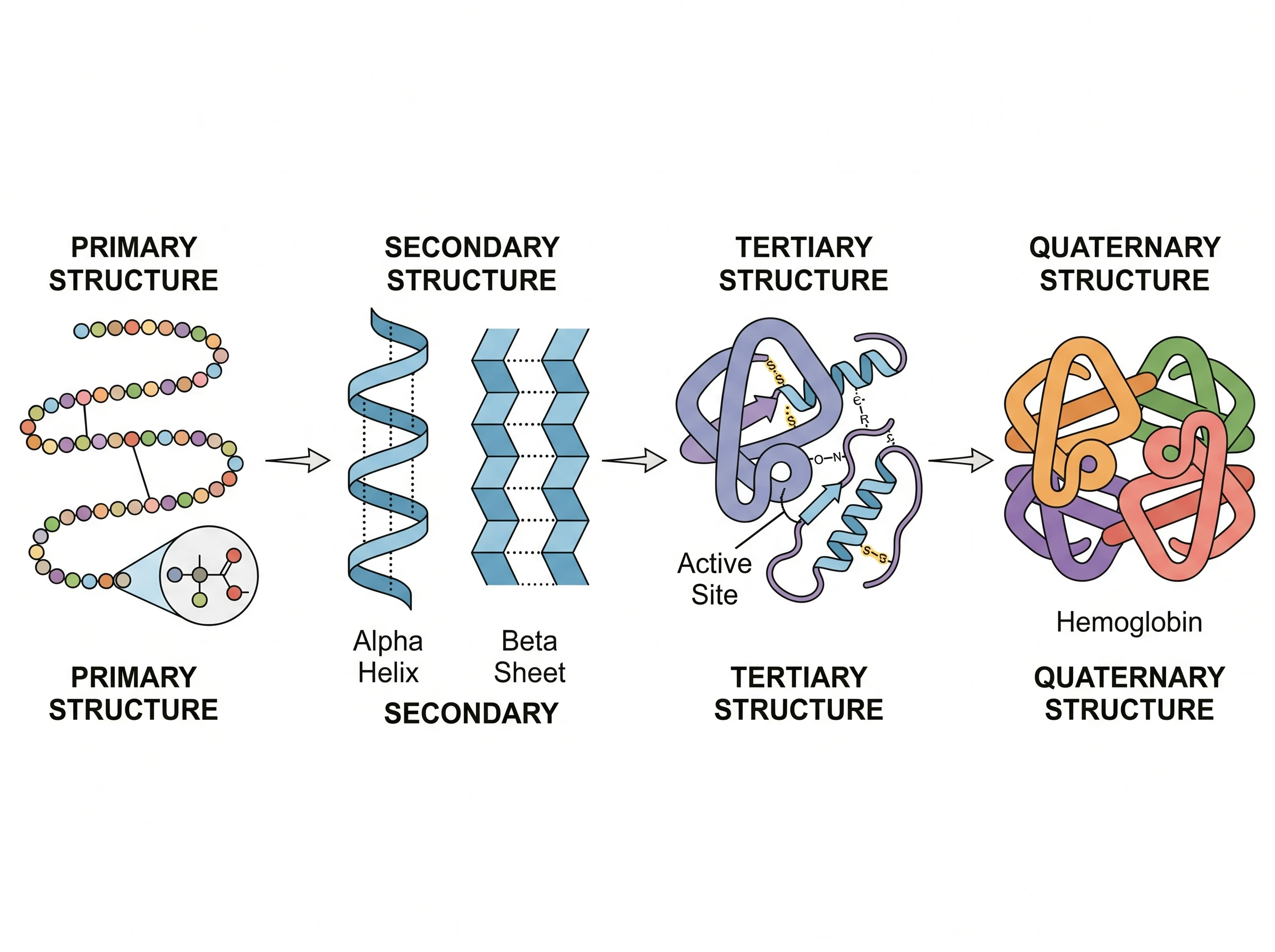
Protein Structure Diagram Generator
Illustrate the four levels of protein structure — the product of translation.
 Biology
Mitosis Diagram Generator
Create labeled diagrams of the phases of mitosis for cell biology lessons.