Molecular Orbital Diagram Generator with Bond Order & Magnetism
Build a molecular orbital (MO) diagram for any period-2 diatomic — N₂, O₂, F₂, C₂, B₂ and more. Fills the bonding and antibonding orbitals correctly, calculates bond order, and shows whether the molecule is paramagnetic or diamagnetic. Free SVG/PNG export.
Period 1–2 homonuclear diatomics. Ordering switches at O₂ (σ2p drops below π2p).
Bond order 2 · paramagnetic
8 bonding − 4 antibonding electrons
Molecular Orbital Diagram Examples
Period-2 diatomics with bond order and magnetism, rendered by the exact engine
O₂ — Paramagnetic
O₂ has two unpaired electrons in π*2p — that is why it is paramagnetic, with bond order 2.
N₂ — Bond Order 3
N₂ shows s–p mixing (σ2p above π2p) and a bond order of 3 — the strong triple bond.
F₂ — Bond Order 1
F₂ fills almost every 2p MO, leaving a bond order of 1 — a single bond.
C₂ — Bond Order 2
C₂ fills the π2p level (below σ2p) for a bond order of 2.
B₂ — Paramagnetic
B₂ is paramagnetic — proof that π2p lies below σ2p (its two electrons go into π2p, unpaired).
H₂ — The Simplest
H₂ — two electrons in σ1s give a bond order of 1, the simplest MO diagram.
What is a molecular orbital (MO) diagram?
A molecular orbital diagram shows how the atomic orbitals of two atoms combine into molecular orbitals when they bond. Each pair of atomic orbitals forms a lower-energy bonding orbital and a higher-energy antibonding orbital. Electrons fill these molecular orbitals from the bottom up, and the result tells you the molecule’s bond order, stability, and magnetism. This generator builds the correct diagram for period-1 and period-2 homonuclear diatomics.
Bonding and antibonding orbitals
When two atomic orbitals overlap, they produce a bonding molecular orbital (lower energy, electron density between the nuclei, stabilizing) and an antibonding orbital (higher energy, marked with an asterisk like σ* or π*, destabilizing). Sigma (σ) orbitals are symmetric about the bond axis; pi (π) orbitals form above and below it and are doubly degenerate. Electrons in bonding orbitals strengthen the bond; electrons in antibonding orbitals weaken it.
How to fill the orbitals: Aufbau and Hund’s rule
- Fill the molecular orbitals from lowest energy upward (Aufbau principle).
- Within a degenerate pair (the two π or two π* orbitals), place one electron in each before pairing up, with parallel spins (Hund’s rule).
- This is why O₂ ends up with two unpaired electrons in its π*2p orbitals — making it paramagnetic, a famous result MO theory predicts and Lewis structures cannot.
The σ2p / π2p ordering switch at O₂
For B₂, C₂, and N₂, s–p mixing pushes the σ2p orbital above the π2p orbitals, so the order is σ2s, σ*2s, π2p, σ2p, … . For O₂, F₂, and Ne₂ the mixing is weaker and σ2p drops below π2p. This switch matters: it is why B₂ is paramagnetic (its electrons go into the degenerate π2p) while a naive ordering would predict it diamagnetic. The tool applies the correct order for each molecule automatically.
Calculating bond order from an MO diagram
Bond order = ½ × (bonding electrons − antibonding electrons). A bond order of 1 is a single bond, 2 a double bond, 3 a triple bond; a bond order of 0 (like He₂ or Ne₂) means no stable molecule forms. For example N₂ has 8 bonding and 2 antibonding electrons → bond order 3; O₂ has 8 − 4 → bond order 2. The generator shows the calculation for every molecule.
When to use the AI illustration mode
Use the exact MO diagram mode for correctly-filled homonuclear diatomic diagrams with bond order and magnetism. Switch to AI illustration for things the template does not cover: heteronuclear diatomics (CO, NO, CN⁻) with skewed atomic-orbital energies, the lobe shapes of σ and π orbitals, or comparisons of ions like O₂⁺ and O₂⁻.
Preguntas frecuentes
Related Chemistry Tools
 Chemistry
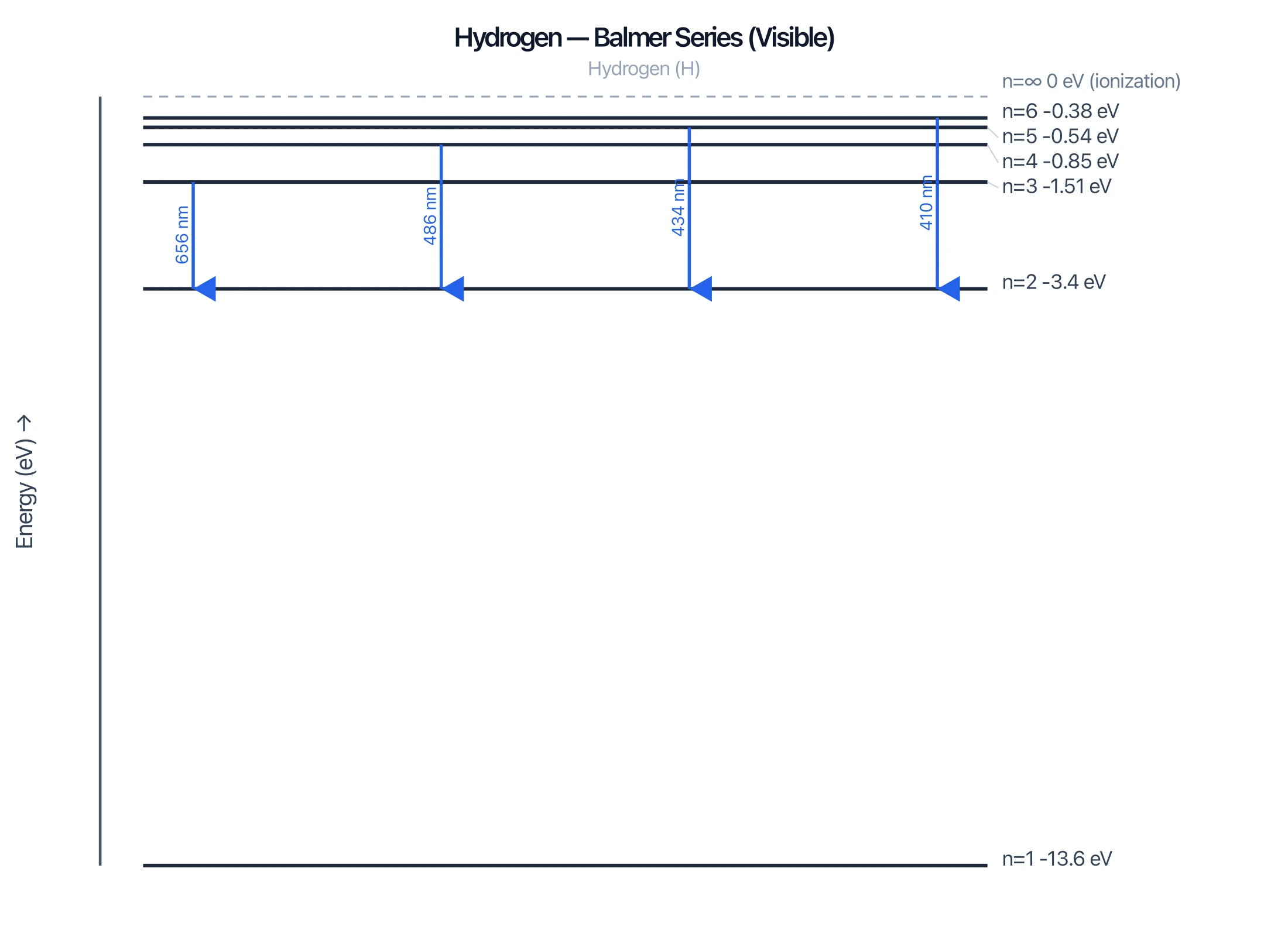
Energy Level Diagram Generator
Plot atomic energy levels and electron transitions for hydrogen and the spectral series.
 Chemistry
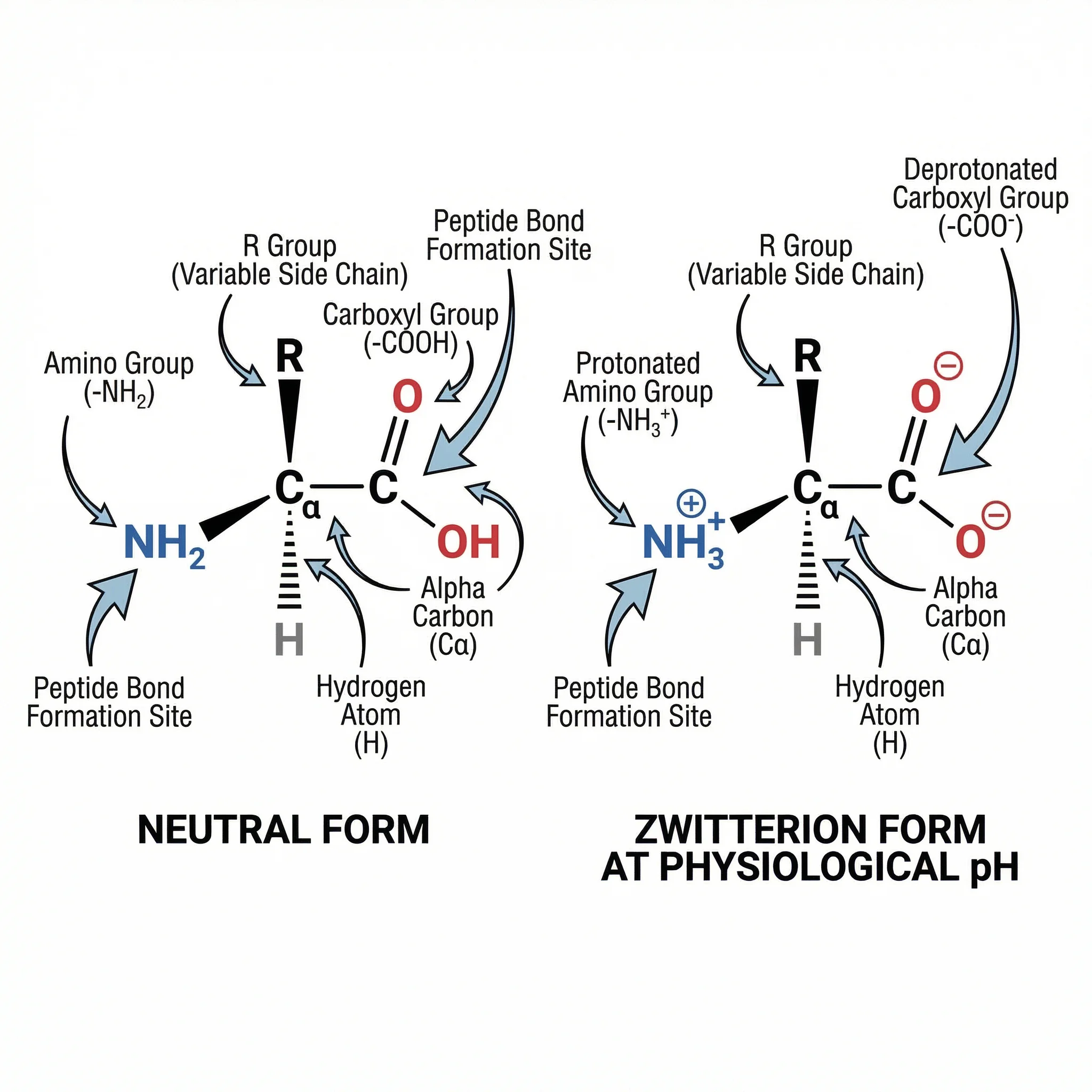
Bohr Model Maker
Create Bohr model atomic diagrams showing electron shells for any element.
 Chemistry
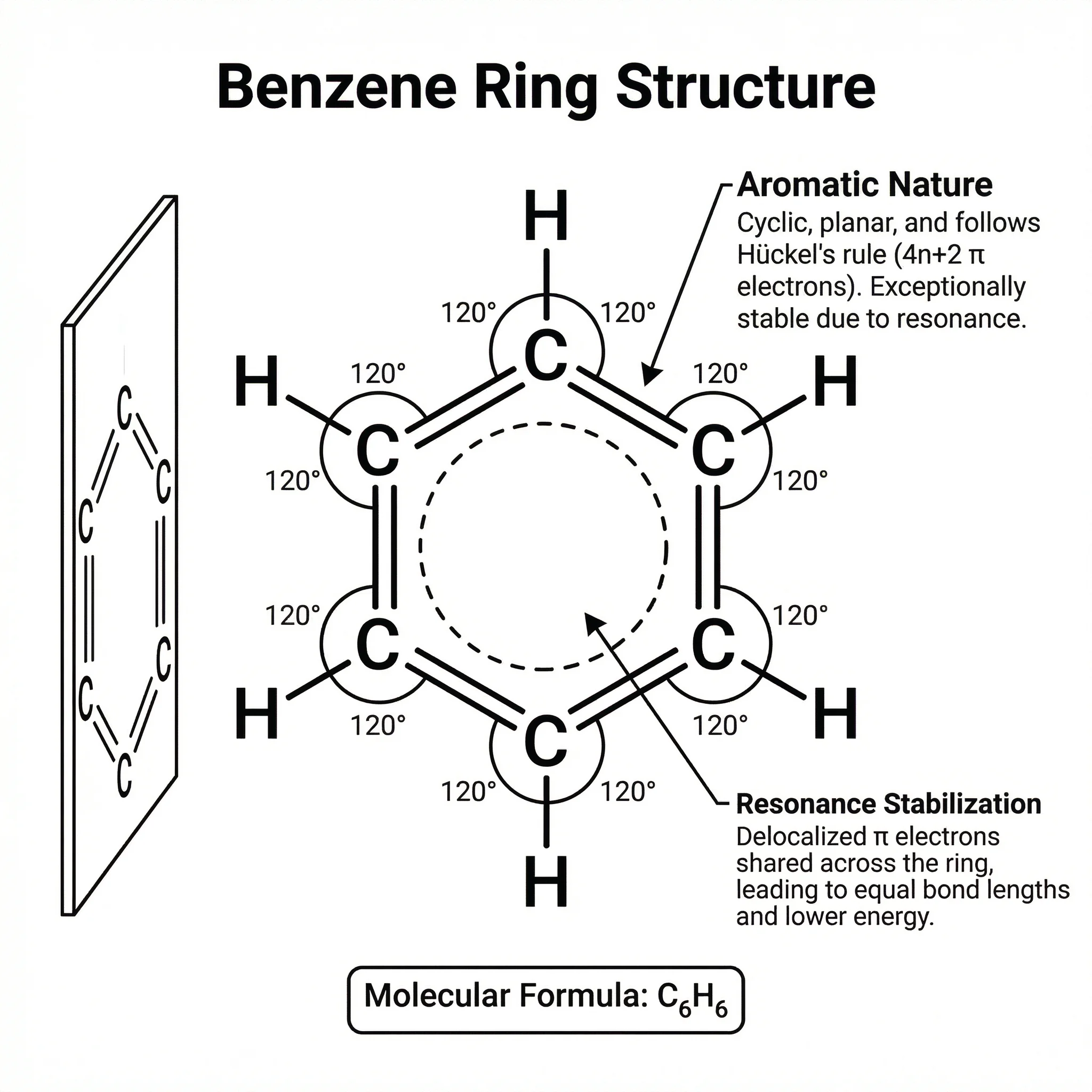
Chemistry Structure Generator
Draw molecules, mechanisms, and chemical structures with clean bonds and labels.
 Chemistry
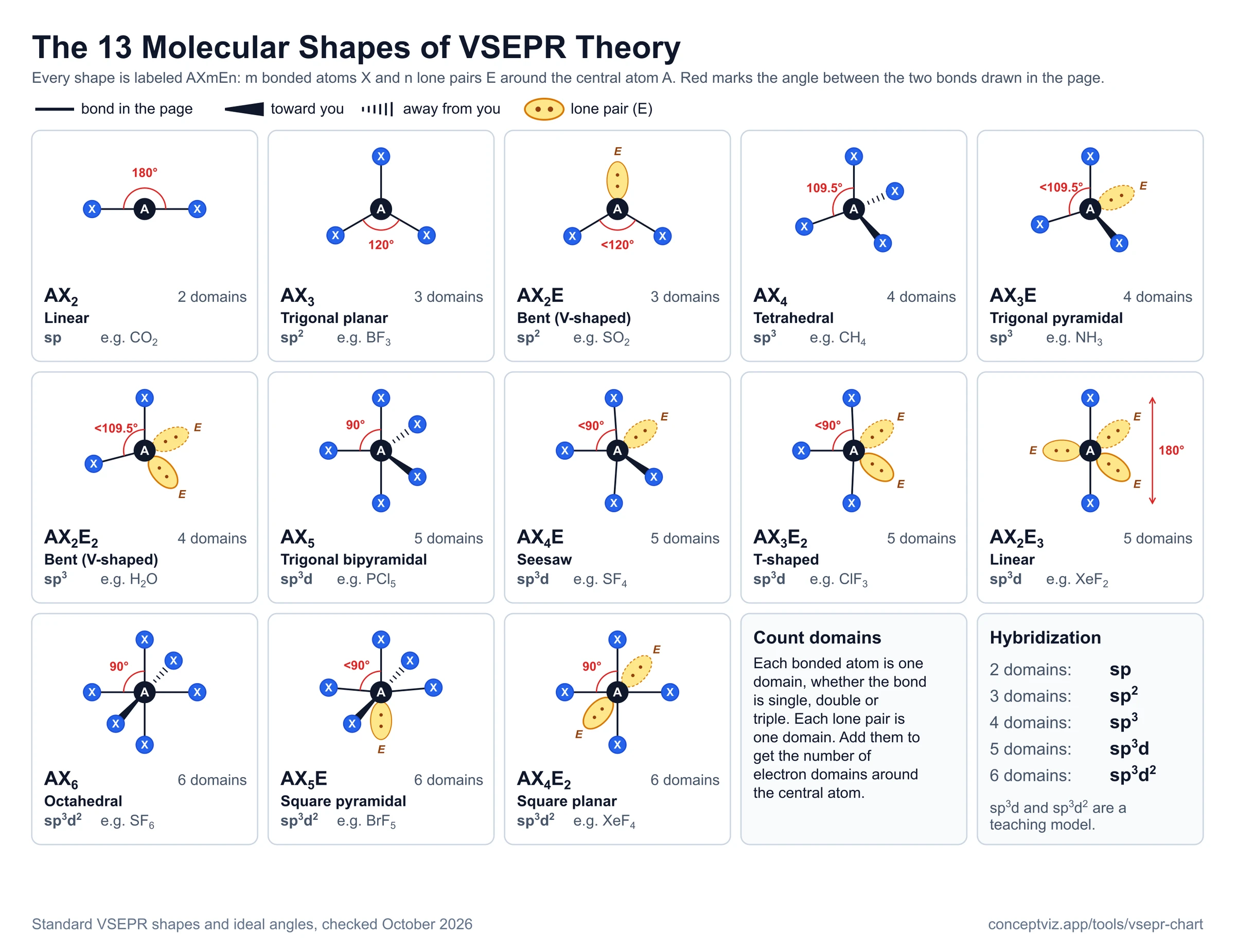
VSEPR Chart
Free VSEPR chart with 13 molecular geometries, bond angles, hybridization and polarity. Look up any AXmEn shape, then print or download.
 Chemistry
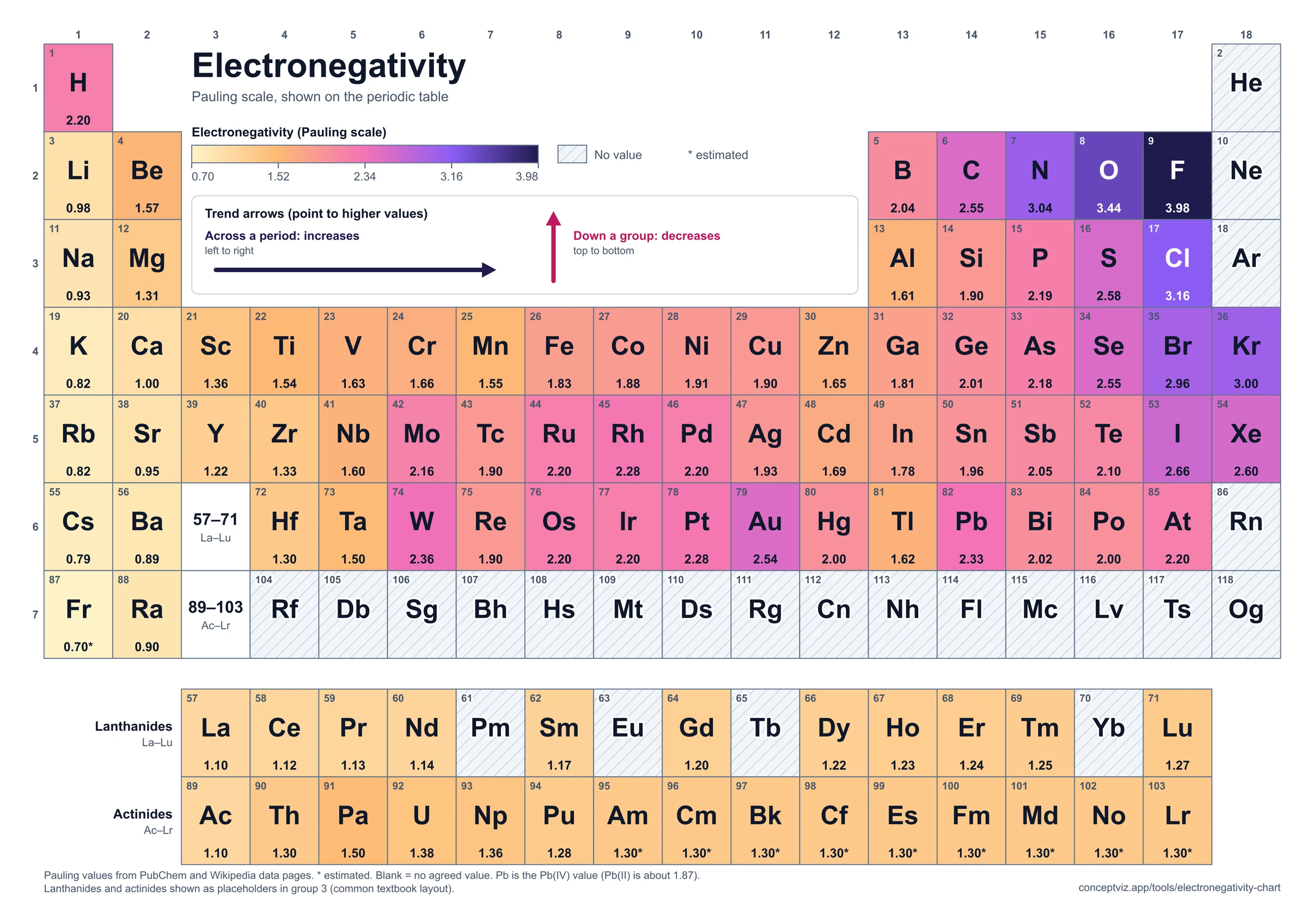
Electronegativity Chart
Periodic table heatmaps of electronegativity, atomic radius and ionization energy, with a sortable list and a bond type calculator.